
All 78 cards included
Major Arcana, Wands, Cups, Swords, and Pentacles are all available in one upright deck.
Fix a generic AI tarot reading
AI tarot answers often turn generic when a prompt asks for a prediction but leaves out the exact cards, their meanings, and a useful answer structure. This guide shows a three-card relationship example that asks for two interpretations, one unknown, one reality check, and a reversible next step. You can then build the same structure with your own draw.
Try the free 3-card promptNo account required. Keep names and identifying details out of optional context.
Major Arcana, Wands, Cups, Swords, and Pentacles are all available in one upright deck.
The prompt sends the exact card names in draw order plus the site's reviewed nonvisual upright meanings, without invented position labels or image descriptions.
The reading first describes the feelings and relationship direction suggested by the cards, then briefly connects them to what can be checked and chosen.
Describe the dynamic without names, contact details, birth dates, or workplace secrets. You can also leave the field empty.
The numbers show draw order only. They do not assign past, present, future, obstacle, or advice roles. Use six cards only when three meanings are not enough to compare several aspects of the question.
Paste the prompt into your preferred AI writing tool, then keep what is useful and question what is not.
Example, not a prediction
This example begins with the relationship answer suggested by the cards, then compares it with behavior. It does not establish another person's feelings or guarantee an outcome as fact.
“How do these cards suggest that this relationship could become more balanced, and what can I check in reality?”
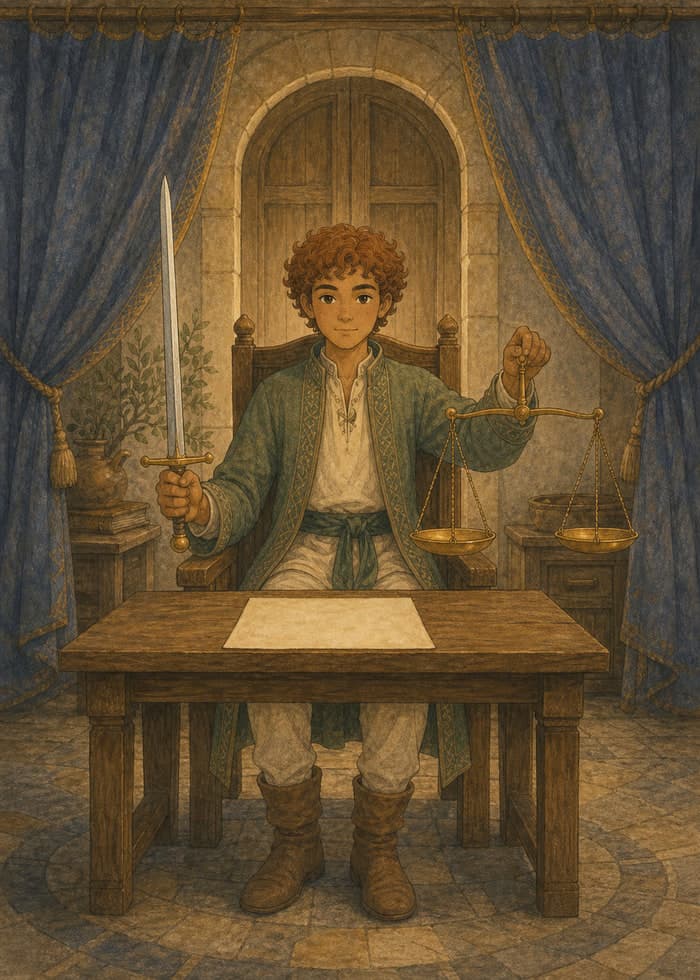
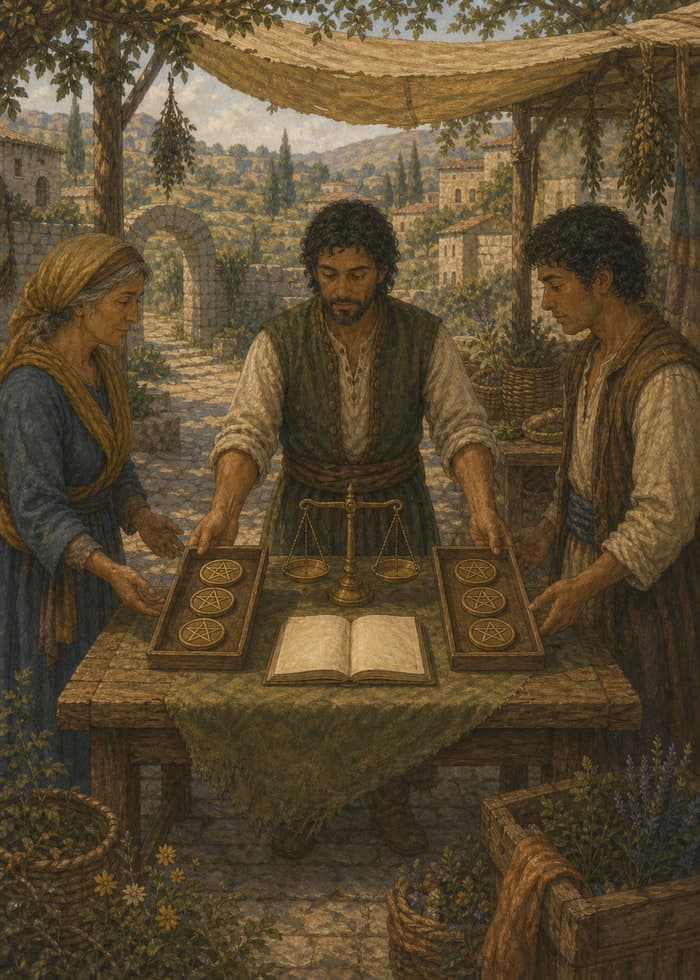
Justice points to fair judgment, accountability, and the consequences of choice. Queen of Swords points to discernment, independence, and clear honest boundaries. Six of Pentacles points to fairness and balance in giving and receiving support. These meanings support reflection; they do not prove that the relationship is fair.
All three meanings reinforce accountable reciprocity: fairness needs a clear boundary and a pattern of giving and receiving that can be observed. The cards do not establish that this pattern already exists.
The current imbalance may be temporary and improve once one responsibility is made explicit. It may also be a stable pattern in which one person's needs and effort repeatedly carry more weight. These are neither exclusive nor exhaustive, so both may partly fit or both may fail.
For the next week, record only whether one already-agreed responsibility is completed by the agreed time, who initiates it, and how many reminders are needed.
The cards cannot establish private feelings, guarantee future effort, or determine whether the relationship is safe and suitable.
Follow-through without reminders raises the temporary hypothesis; repeated omission raises the stable-pattern hypothesis. If the responsibility itself was unclear or unrealistic, suspend both and redesign the check.
Write down one small change in responsibility and a one-week review point. Regardless of which hypothesis seems stronger, stop if scope expands without agreement, a boundary is mocked, pressure or retaliation appears, safety becomes a concern, or the review date arrives.
Am I judging fairness by balanced words or by responsibility that continues in observable behavior?
Not as a verified fact. By connecting the supplied meanings, a reading can describe which emotional and relational direction seems more strongly suggested, while keeping that interpretation distinct from the person's actual words and behavior.
Optional context stays in your browser. It is excluded from reading URLs and analytics, and leaves the site only if you choose to copy or share it elsewhere.
It includes your selected topic and tone, optional context if you entered it, and the exact card names in draw order with the site's reviewed nonvisual upright meanings. It explicitly says that no card images or position meanings are attached.
Start with three cards and move to six only when three meanings are not enough to compare several aspects of the question. You can change the answer tone before drawing.
For entertainment and self-reflection only. Not medical, legal, financial, investment, or mental-health advice.